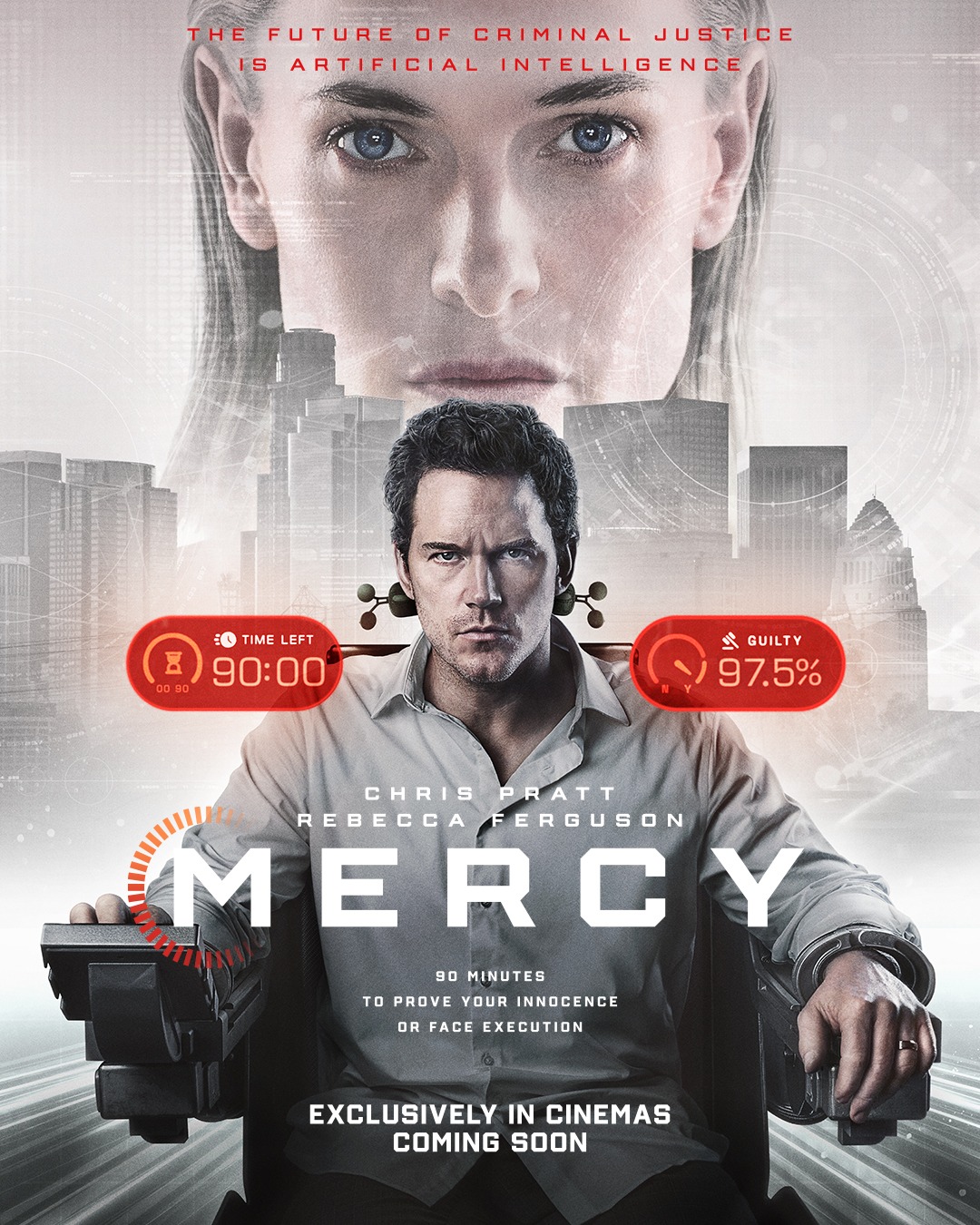
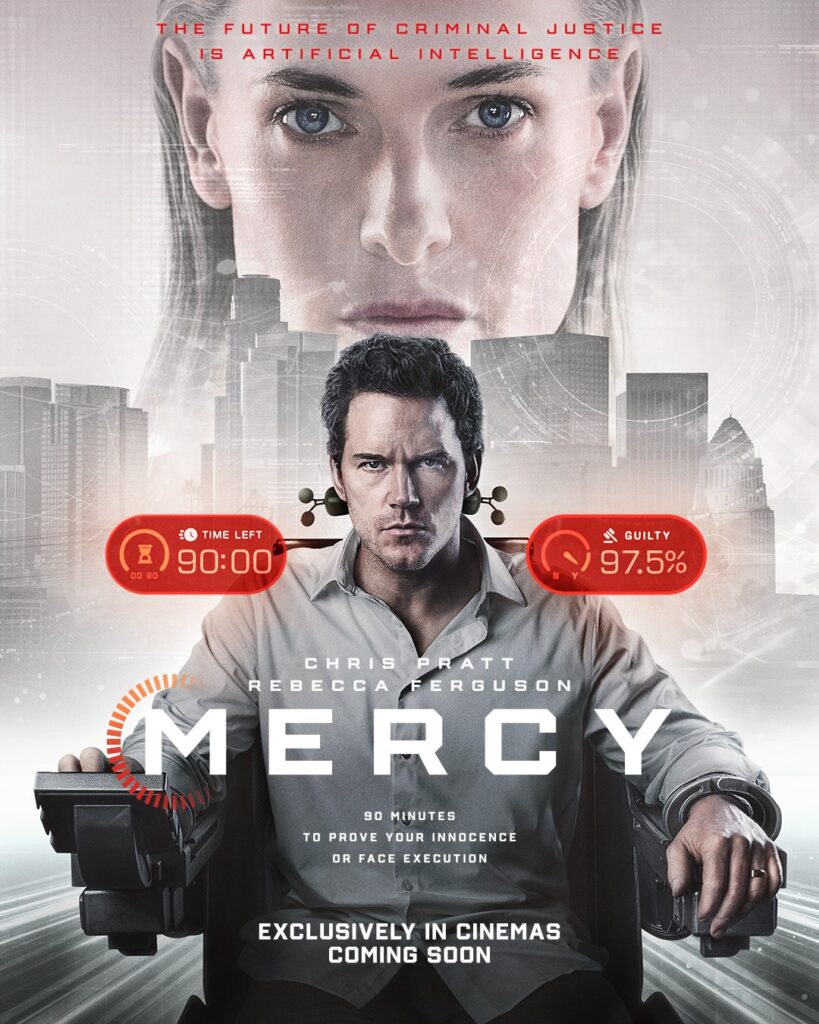
Director: Timur Bekmambetov
AI justice sounds fair until you’re the one on trial. This film presents a future where an artificial
intelligence serves as the judge, promising efficiency, accuracy, and convenience, especially for the
government. However, the film quickly reveals how terrifying this system can be, since the AI’s accuracy
depends entirely on the information provided by humans information that can be incomplete,
manipulated, or false.
Artificial intelligence is undeniably convenient in modern life. Accessing information is as simple as
having a computer and an internet connection. In the film, the justice system appears almost perfect as
long as everything is recorded caught on camera, heard on a microphone, or digitally tracked. But the
story raises unsettling questions: What if the crime wasn’t recorded? What if there was no internet
connection at that time or place? What if the system malfunctioned or someone was deliberately framed?
When a person’s life depends on digital evidence alone, these flaws become dangerous.
One of the most disturbing aspects of the film is that the judge is not human. The AI has no emotions,
empathy, or true understanding of human behavior. It relies solely on facts and data supplied to it,
regardless of whether those facts are accurate or fairly presented. In this system, the accused must defend
themselves without a lawyer or any form of human support. If a person cannot properly explain or argue
their case, they are left to die alone. This portrayal highlights a cruel and dehumanizing form of justice.
The film also emphasizes how AI fails to account for human limitations. What if the accused is illiterate
or lacks the ability to defend themselves? How can they stand against a machine that does not understand fear, confusion, or emotional distress? By presenting these scenarios, the film shows the stark difference between human judgment and artificial judgment, making AI appear as a terrifying authority when placed in control of life-and-death decisions.
Beyond its fictional setting, the film feels highly relevant to the present and future. Society is steadily
transitioning into an AI-driven world, where technology plays a role in work, education, and daily life.
While AI offers many benefits, the film warns against relying on it completely. Progress should not come
at the cost of humanity. AI should not determine innocence or guilt, and it should never have the power to decide who lives or dies.
Overall, the film is compelling and thought-provoking. Despite taking place largely in a single location,
the suspense remains strong throughout. Rebecca Ferguson delivers an impressive performance as the AI
judge, convincingly portraying a cold and emotionless authority, while Chris Pratt effectively conveys
fear, desperation, and psychological pressure. The pacing is well-balanced—neither too slow nor too
fast—and each revelation is delivered at the right moment, keeping the audience engaged from the
beginning until the end.
This film succeeds not only as a thriller but also as a cautionary story about the limits of artificial
intelligence and the importance of preserving human judgment, empathy, and justice